24/7 Emergency Response
Tracer Gas Leak Detection London
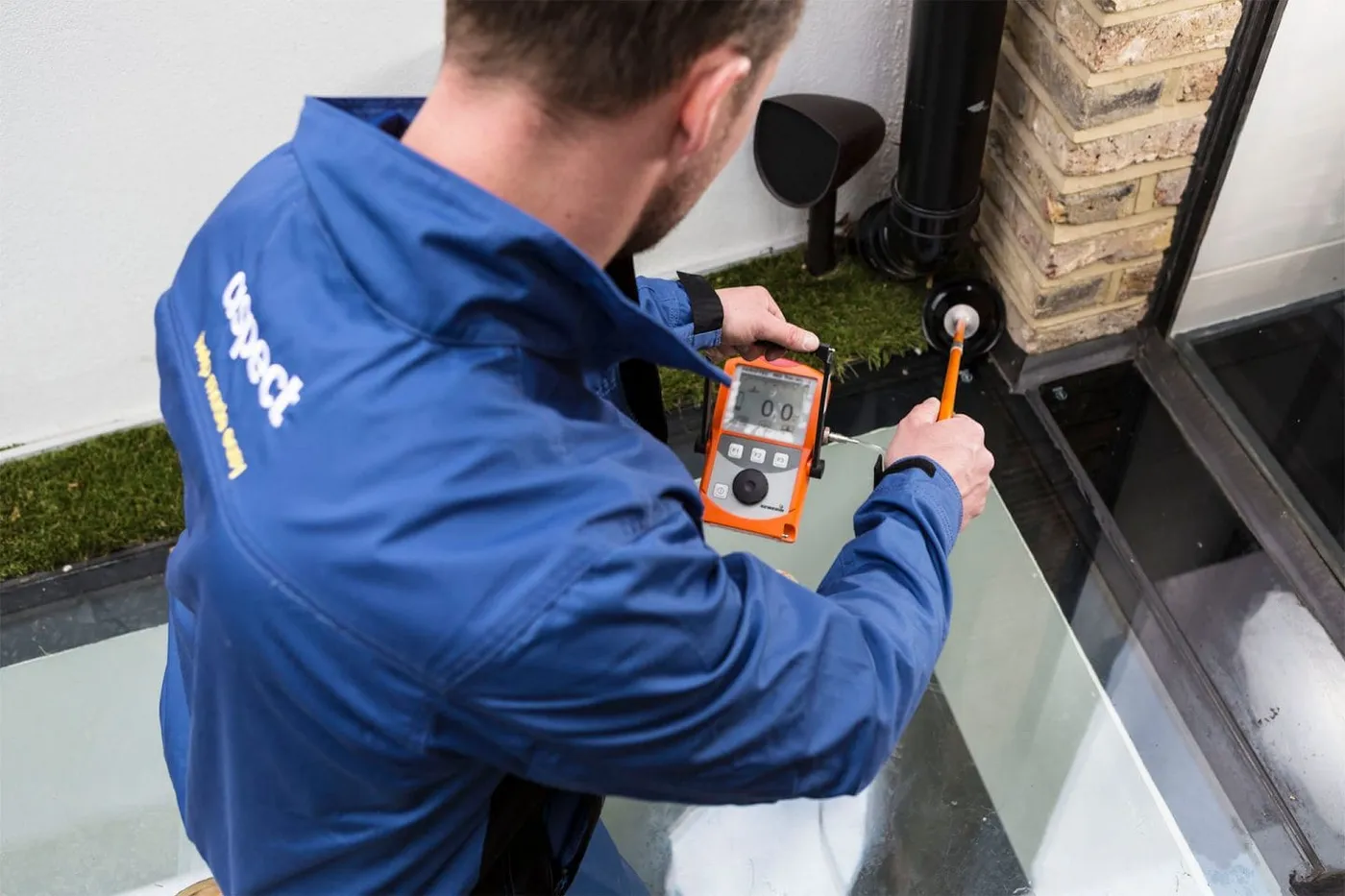
Tracer gas is a hydrogen and nitrogen mix pushed into a pipe that has been emptied first. Hydrogen is the smallest molecule there is, so it works its way up through screed, tile, concrete and soil to a probe held at the surface. It goes where sound cannot and where heat shows nothing.
How a tracer gas visit is priced
| Job | How it is charged | Time |
|---|---|---|
| Draining the circuit ready for gas | Part of the detection fee | Before tracing begins |
| Tracing one emptied system | Fixed detection fee, agreed at booking | Allow most of a visit |
| Buried or under-screed run with slow surfacing | Same fee, longer slot reserved | Gas needs time to rise |
| Refilling, venting and rebalancing afterwards | Included, not billed as extra labour | End of the visit |
| Repair once the probe has marked the spot | Quoted separately | Usually a return in daylight |
How each stage is charged, not a quote. The detection fee is fixed and agreed on the call, before an engineer travels.
That reach is why it settles the leaks nothing else has managed to. It is also why it is not the first thing we do at midnight. The system has to be drained before gas can go in, and refilled and rebalanced afterwards, which means your heating or water is off for a stretch. That is a reasonable ask at ten in the morning and an unkind one in the middle of the night.
So the usual pattern on an overnight call is to stabilise things now and bring the gas in daylight. Get the water stopped, work out what is safe to leave, and book the trace properly for a sensible hour. Our engineers are on call round the clock, and part of that job is telling you when waiting is the better move.
Tracer gas sits under the same fixed detection fee as any other method. Needing the harder approach is not a reason to charge you more for it, and the draining, refilling and rebalancing are part of the job rather than extra labour on the invoice. The fee is agreed at booking and the repair is quoted separately once the probe has marked the spot.
What you get
- 24/7 emergency deployment across London – we come to you, out-of-hours.
- Rapid, pinpoint accuracy for leaks under screed, concrete floors, and behind walls.
- Non-destructive method – avoids unnecessary digging or damage to your property.
- Effective on pressurised central heating systems and underfloor heating leaks.
- Immediate, clear results shown to you on-site with digital detection equipment.
- Follow-up report provided with evidence and location for your plumber to repair.
How it works
A method, not a guess
01
Stabilise tonight
Supply isolated, spread contained, and an honest assessment of what genuinely has to happen before morning. Very often gas tracing is not on that list.
02
Draining the circuit
Water out before gas goes in. You are told beforehand how long the system will be down, so it is never a surprise on the day.
03
Injecting and letting it rise
The inert mix is introduced and given the time it needs to climb through the floor. Rushing the probe across too early is how a trace fails.
04
Probing, marking, refilling
The probe sweeps the surface until it picks the gas up, and the point is marked. The system is then refilled, vented and rebalanced before we leave.
What a tracer gas visit asks of you before you book it
The system has to be empty first
This is the part that surprises people and it shapes everything else about the job. Gas cannot go into a pipe that is full of water, so the circuit is drained before anything is injected, then refilled, vented and rebalanced afterwards. That means your heating or your water is out of action for a stretch of the visit rather than a few minutes. It is a perfectly reasonable ask at ten in the morning and a much less reasonable one at two in the morning with a household asleep.
It is the answer to silence, not the opening move
Tracer gas earns its place when the other methods have run out. If a pipe is audible, listening is faster and needs nothing switched off. If the leak is warm and shallow, a camera sees it immediately. Gas comes into its own when the pipe is plastic, buried in screed or under a solid floor, where there is no sound to hear and no useful heat signature. A firm leading with the most expensive method before trying the cheap ones is choosing for its own reasons.
Give it time to come up through the floor
Hydrogen has to work its way through screed, tile, concrete or soil before it reaches the probe at the surface, and that takes longer than people expect. A trace where the engineer sweeps across too early will find nothing and the visit is wasted. This is a job that needs a properly sized appointment rather than being squeezed into the end of a day, so it is worth asking how long has been allowed rather than only when somebody is arriving.
Ask what mix is going into your pipework
The standard is a small proportion of hydrogen carried in nitrogen, which makes the mixture inert, non-toxic, non-flammable and odourless. It leaves no residue and does nothing to pipes or fittings. There is no reason for a firm to be vague about this, so a straight answer naming the mix is a reasonable expectation and a certain amount of hand-waving about a safe gas is not. Ask, and note the quality of the reply.
Expect the system to be put back properly
Draining and refilling a heating system creates air, and air creates cold radiators, noise and a system that never quite works as it did. Refilling, venting and rebalancing is part of the job, not an optional extra and not something to be left with you afterwards. Establish before booking that the circuit will be returned to working order and tested, because this is where an otherwise successful trace turns into a fortnight of annoyance.
Check that the harder method does not cost you more
Needing tracer gas usually means your leak was one of the difficult ones, and it is worth knowing whether difficulty is priced to you or absorbed by the firm. A fixed detection fee covering whatever methods the job requires puts that risk where it belongs. A structure that charges per technique gives whoever is choosing the methods an interest in choosing more of them. Checkatrade publishes a UK average of £162 for leak detection, with most jobs between £115 and £234 and a full recorded spread of £80 to £1,600, which is a fair reference point for what the whole exercise ought to sit near.
Compare like for like
When emptying the pipe is worth the trouble
Tracer gas finds leaks the other methods cannot, because hydrogen is small enough to climb up through screed, tile and concrete to a probe at the surface. The cost of that reach is preparation: the system has to be drained before anything can be injected, then refilled and rebalanced afterwards. That makes it the right answer to a specific kind of problem and the wrong first move at midnight.
| What to check | A firm that leads with gas | A firm with no gas at all | How we run the call |
|---|---|---|---|
| When gas is proposed | Early, because it is the most expensive item on the list. | Never, so a screeded or plastic run simply does not get found. | After sound and heat have been tried and have not settled it. Gas is the answer to silence, not the opening move. |
| The drain-down | Mentioned briefly, if at all, before the system is emptied. | Not applicable. | Explained before you agree, because your heating or water will be off for a stretch and you should be expecting that. |
| Overnight suitability | Sold at any hour, including hours when draining a system is a poor idea. | Unavailable either way. | We would usually stabilise tonight and bring the gas in daylight, rather than leave you without heating until morning. |
| The mix used | Described loosely as a safe gas with no further detail. | Not offered. | Hydrogen in nitrogen, inert, non-toxic and odourless. Ask and you will be told the mix, not a reassurance. |
| Waiting for it to surface | Rushed, so the probe sweeps before the gas has come through the floor. | Not applicable. | Gas takes time to rise through screed. The slot is booked long enough to let it, instead of cutting the trace short. |
| Putting the system back | Refilled quickly, sometimes leaving air locks and cold radiators behind. | Not applicable. | Refilled, vented and rebalanced before we leave, and not billed as additional labour. |
| What it costs you | Priced as a premium service because of the equipment involved. | The cost of never finding the leak at all. | The same fixed detection fee. Needing the harder method is not a reason to charge you more for it. |
From the forums
The questions that come up when a leak starts
Tracer gas comes up in the discussions where somebody has already had two visits that found nothing, so the tone is different from the rest of the leak detection discussions. Less about being overcharged, more about how long the whole thing has dragged on.
Posts from people on their third detection visit
The pattern is a listening survey that heard nothing, a camera survey that showed nothing, and then somebody finally proposing gas. What the writers tend to conclude is not that the earlier visits were fraudulent but that nobody explained the sequence at the outset. Understanding upfront that plastic and screed defeat the easier methods would have saved them a fortnight, which is why a firm setting out the likely order of methods on the first call is doing something useful.
Questions about whether the gas is safe indoors
Asked constantly and answered consistently, including by people with no commercial interest: the mix is mostly nitrogen with a small hydrogen fraction, which makes it inert and non-flammable at that concentration. The reassurance people actually want is usually about children and pets, and the answer is that there is nothing to breathe in, nothing left behind and no smell. The thing worth taking from these discussions is to ask for the mix by name rather than accepting a general statement.
Complaints about being left without heating
A recurring grumble concerns the drain-down, particularly where nobody warned the household it was coming. Posts describe a cold house for most of a day and, occasionally, a system that came back with air in it. The advice that follows is to confirm the expected downtime before the appointment and to check the radiators are rebalanced before the engineer leaves, which are both entirely reasonable things to have agreed in advance.
Threads about gas succeeding where digging had already started
The more cheerful posts describe a garden or drive already partly excavated on a guess, then a gas trace pinpointing the leak somewhere else entirely and saving the rest of it. These are the clearest illustrations of the underlying economics: locating accurately is almost always cheaper than opening speculatively, and it is the excavation rather than the detection that does the damage to your property and your budget.
Advice about not booking gas as the first response at night
Tradespeople in these discussions are fairly blunt that emptying a system in the small hours is rarely the right call. The consensus running order is to stop the water, get through the night, and book the trace properly for daylight when being without heating is an inconvenience rather than a problem. It is also cheaper, since the daytime band applies to what is fundamentally a planned piece of work.
Symptoms
When tracer gas is the method of choice
A safe hydrogen–nitrogen mix finds leaks that sound and heat cannot. Best for plastic pipe, screed and slow losses.
- Plastic pipework (PEX, MLCP) with a pressure loss
- Leak under screed or tiles with no acoustic signal
- Underfloor heating loop that will not hold pressure
- Previous acoustic or thermal visit that found nothing
- Insurance job needing a second-method confirmation
What tracer gas needs from you
- 1Expect the affected circuit to be drained and refilled with gas mix.
- 2Allow time for gas to migrate through floors or soil, not a 20-minute visit.
- 3Keep pets and open flames away from the work area during the test.
- 4Provide floor plans or known pipe routes if you have them.
Safe, proven and insurer-friendly
The standard mix is non-flammable at working concentration and rises through the same path water takes. We mark the strongest detector reading so access is a single small opening, not a fishing expedition across the room.
Book a visitLondon housing stock
Built for how London actually leaks
Housing stock across the capital fails in different ways. We match the method to the building, not a one-size survey script.
Victorian & Edwardian terraces
Original floorboards, cast-iron stacks and decades of patch repairs. We pressure-test circuits and listen through timber before any board is lifted.
Mansion blocks & conversions
Shared risers, stacked bathrooms and flat-to-flat disputes. Origin reports settle liability between leaseholders, freeholders and block insurers.
Post-war & 1970s stock
Copper branches, cold-water tanks and ageing joints. Acoustic and thermal methods locate slow drips that never show as a flood.
New-build flats & towers
Plastic pipe, underfloor heating and boosted mains. Tracer gas and thermal imaging matter more than a listening stick alone.
Questions
Tracer Gas FAQs for London homeowners
Is the gas safe in an occupied home?
Yes. It is hydrogen at a very low concentration carried in nitrogen, which makes the mix inert, non-toxic and non-flammable. It has no smell, leaves nothing behind and does no harm to pipework, fittings or the building. Ask the engineer to confirm the mix being used and you will get a straight answer rather than a general reassurance.
How long will I be without heating or water?
Long enough to drain the circuit, run the trace and refill it, which is most of a visit rather than a few minutes. That is precisely why it is normally scheduled for daylight rather than run at 3am. You will be told the expected window before the work is booked so you can plan around it, particularly if there are children or anyone elderly in the property.
Why isn't this your first choice on a night call?
Because leaving a household without heating or water overnight to run a method that needs patience is the wrong trade-off. Acoustic and thermal work need nothing switched off and can be done immediately. If they settle it, the gas was never needed. If they do not, we stabilise things and bring the gas back in daylight when the drain-down is an inconvenience rather than a hardship.
When is tracer gas the right answer?
When the pipe has gone quiet and the camera is showing nothing useful. That means plastic pipework, runs buried in screed or under a solid floor, underfloor heating loops, and external supply pipes across a garden or drive. Gas surfaces through material that blocks both sound and heat, which is why it finds the leaks that have already defeated two other visits.
Does the gas leave any residue in my pipes?
No. Both hydrogen and nitrogen are gases at normal temperature and pressure, so nothing is deposited, nothing coats the inside of the pipe and nothing needs flushing out afterwards. The system is refilled with water and vented in the normal way, and once the radiators are rebalanced it behaves exactly as it did before.
Is tracer gas safe around children and pets?
Yes. It is a small proportion of hydrogen carried in nitrogen, which makes the mixture inert, non-toxic and non-flammable at the concentration used. It has no smell, leaves no residue and does not harm pipework or the building. There is nothing to breathe in and nothing to clean up afterwards. If you would like the specific mix named before work begins, ask and you will be told.
How long will my heating or water be off?
Long enough to drain the circuit, run the trace and refill it, so plan for most of the visit rather than a few minutes. You will be given the expected window before the appointment is confirmed, which matters particularly if there are young children or elderly people in the property. This downtime is the main reason the method is normally scheduled for daylight rather than run overnight.
Why wouldn't you use tracer gas straight away on an emergency call?
Because leaving a household with no heating or water in the middle of the night, to run a method that needs patience, is the wrong trade-off. Listening and imaging need nothing switched off and can start immediately. If they settle it, the gas was never required. If they do not, we stabilise things overnight and bring the gas back in daylight when the drain-down is merely inconvenient.
When is tracer gas the right method?
When the pipe has nothing to tell the other methods. Plastic pipework that carries no sound, runs buried in screed or under solid floors, underfloor heating loops, and external supply pipes crossing a garden or drive. Hydrogen surfaces through materials that block both sound and heat, which is why gas resolves the leaks that have already defeated a listening visit and a camera visit.
Does the gas leave anything behind in my system?
No. Both components are gases at normal temperature and pressure, so nothing is deposited, nothing coats the pipe and nothing needs flushing afterwards. The circuit is refilled with water and vented as normal. Once the radiators are rebalanced and the pressure is set, the system behaves exactly as it did before the visit.
Can tracer gas find a leak under a concrete floor?
Yes, and it is one of the main reasons to use it. Hydrogen is a very small molecule and migrates upward through concrete, screed, tile and soil to a probe held at the surface. That is precisely the situation where listening fails, because a solid floor with plastic pipe beneath it gives almost nothing to hear. The trade-off is the drain-down and the waiting time.
Explore the cluster
Related leak detection services & guides
Leak detection London
Hub page for multi-method surveys
Acoustic detection
Listen for pressurised pipe noise
Thermal imaging
Map wet and warm anomalies
Underground leaks
Supply pipe and mains traces
Trace & access
Insurer-ready reports
Pricing
Fixed fees and no find no fee
Areas we cover
All 33 London boroughs
Leak detection guide
How methods compare
Insurance claims
Escape of water explained
London-wide
Tracer Gas across all 33 boroughs
Same multi-method kit and fixed-fee approach from Barking to Richmond. Pick your borough for local housing detail.
Water going somewhere it shouldn't?
Tell us the symptoms and your postcode. We'll confirm the visit, the fixed detection fee and the arrival window before you commit to anything.
Book a detection visit