24/7 Urgent Response
Commercial Leak Detection London
In a commercial building the water is rarely the expensive part. The expensive part is a shop that cannot open, a kitchen that cannot serve, a floor of desks nobody can use. Which means the scheduling of a commercial survey matters as much as the detection, and it is usually the bit that gets treated as an afterthought.
How a commercial survey is priced
| Job | How it is charged | Time |
|---|---|---|
| Survey of one unit, floor or demise | Fixed survey fee, agreed at booking | Scoped to the access window |
| Work run overnight or before the building opens | Out-of-hours band, agreed in advance with the manager | Whenever the building is quiet |
| Tracing across risers and more than one occupier | Priced as one survey, not per door | May run over several windows |
| Standing by while a caretaker or porter opens up | Not billed as survey time | Depends on the building |
| Remedial work after the source is established | Quoted separately so it can go out to tender | Scheduled with the occupier |
How each stage is charged, not a quote. The detection fee is fixed and agreed on the call, before an engineer travels.
So the useful question is not how quickly someone can attend, it is when the building is empty and who can unlock the plant room. Surveys run overnight, before opening or after close, and detection work is one of the few trades that is genuinely better in an empty building: quieter for listening, and settled for thermal work.
Our engineers are on call at any hour, and for commercial jobs that is a scheduling advantage rather than an emergency premium. Tell us the trading pattern and who holds the keys to the risers, and the visit gets built around those windows instead of interrupting your day and yours alone.
A fixed survey fee is agreed at booking, scoped to the access window rather than to a count of units. Where a run crosses more than one occupier it is still one survey, not several instructions. Remedial work is deliberately quoted on its own so it can go to whichever contractor you choose, and time spent waiting for a caretaker to open up is not billed as survey time.
What you get
- 24/7 Emergency Dispatch – Our commercial response teams are available round the clock, including weekends and bank holidays.
- Fast-Response Engineers – We prioritise commercial calls, aiming for rapid arrival to contain water damage and minimise business interruption.
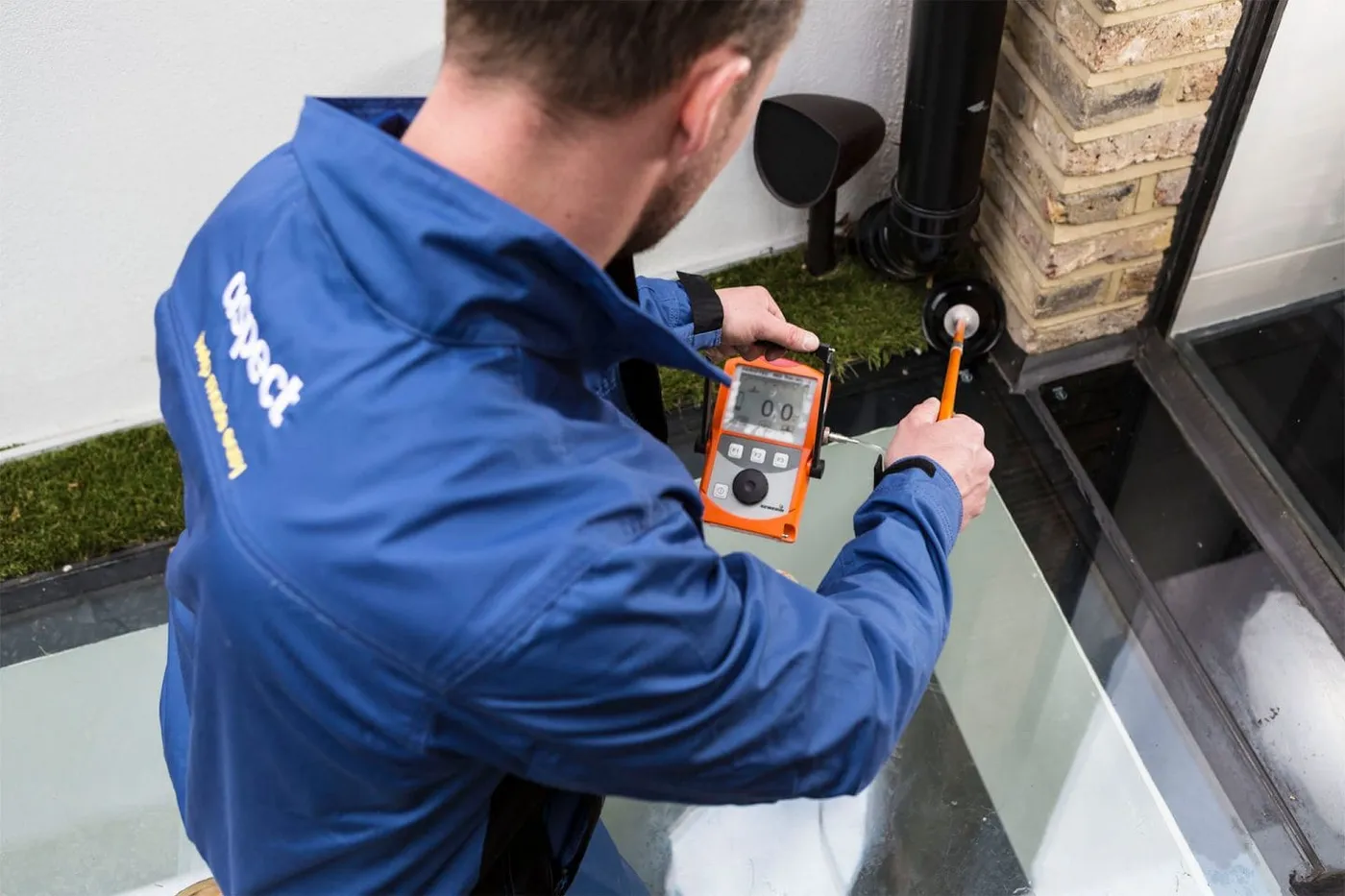
- Advanced Electronic Detection – We use acoustic listening devices, thermal imaging cameras, and tracer gas to locate hidden leaks without unnecessary destruction.
- Commercial Property Expertise – We understand the complex plumbing in offices, retail spaces, industrial units, and multi-tenancy buildings across London.
- Minimal Disruption – Our non-invasive methods allow us to pinpoint leaks beneath floors, behind walls, or under concrete with precision, preserving your premises.
- Comprehensive Reporting – You receive a detailed diagnostic report with findings and location evidence to inform swift, accurate repairs.
How it works
A method, not a guess
01
Scope and access, together
What the water is doing, and just as importantly when the building is empty and who opens the plant room, riser cupboards and any neighbouring demise.
02
A window, not a slot
The visit is booked into the hours the building is quiet, whether that is overnight, before opening or after close, with the key holder arranged in advance.
03
Tracing across the demise
Water crosses party walls without asking permission. The run is followed wherever it goes and treated as one survey rather than billed per door.
04
An answer before you reopen
You are told what was found before the building opens again, so you can make the decision about trading with the information rather than without it.
Getting a commercial survey booked so it does not cost you trading
Price the closed door, not just the survey
In a commercial building the detection fee is usually the small number. The large one is a shop that cannot open, a kitchen that cannot serve or a floor of desks nobody can sit at, and that cost accrues per hour whether or not anybody is on site. Once you look at it that way the scheduling of the visit matters at least as much as the price of it, and paying an out-of-hours band to protect a trading day is frequently the cheaper arrangement overall.
Sort the keys before you sort the appointment
The most common way a commercial survey fails is a locked door. Plant rooms, riser cupboards, roof voids, basements, meter housings and the neighbouring unit the pipe passes through are all routinely secured, and the person with the keys usually went home hours before an overnight visit starts. Establish who holds what and confirm they are contactable during the window. An engineer standing outside a locked riser at 2am has wasted everyone's night and your money.
An empty building is better for the survey, not just for you
This is worth knowing because it changes the negotiation. Detection benefits from quiet: acoustic work competes with plant, lifts, kitchen equipment and footfall, and thermal imaging reads more cleanly in a building that has settled. So running the survey overnight or before opening is not purely a concession to your trading hours, it genuinely improves the chance of a result. Out of hours is the better technical choice as well as the better commercial one.
Water crosses demises without asking anyone
In a multi-let or mixed-use building the leak reported in one unit frequently originates in another, or in common parts nobody has thought about. A survey that stops politely at a party wall will not find it. Decide in advance how a trace that leads next door will be handled and whether access can be arranged, because discovering that question halfway through the night is how investigations turn into three separate instructions and three separate fees.
Keep the survey and the remedial work separately priced
In managed buildings the repair often has to go out to tender, sit with an approved contractor or be signed off by somebody who was not on the call. If detection and remediation arrive as one figure you cannot do any of that, and the finding part, which is the bit you actually needed, becomes impossible to isolate. Insist they are quoted separately so you can take one without being committed to the other.
Decide what the written record has to be capable of
A note that satisfies a facilities manager and a document that will still be useful in a conversation between two occupiers and a managing agent are not the same thing. Work out before the visit who is going to read it and what they need it to establish, and say so. It costs nothing to specify in advance and is close to impossible to recreate later once the building has been reinstated.
Compare like for like
A survey that does not close the building
In a commercial building the leak is rarely the expensive part. The expensive part is a shop that cannot trade, a kitchen that cannot serve or a floor of desks nobody can sit at. That makes the scheduling of a commercial survey at least as important as the detection itself, and it is the thing most firms treat as an afterthought.
| What to check | A domestic firm taking commercial work | A nine-to-five contractor | How we run the call |
|---|---|---|---|
| When the work happens | Whenever a slot exists, which usually means the middle of your trading day. | Weekday working hours only, so the disruption lands squarely on the business. | Overnight, before opening or after close. The building being empty is an advantage for the survey, not an obstacle. |
| Getting into plant and risers | Turns up and discovers the riser cupboard is locked and the key holder went home at five. | Expects someone to be available, and bills the waiting time when they are not. | Access is arranged before the visit is booked. Who unlocks what, and when, is settled in the first conversation. |
| More than one occupier | Investigates the unit that reported it and stops at the party wall. | Requires a separate instruction, and a separate fee, for each demise involved. | Water crosses demises without asking. We trace the run it is actually on and treat it as one survey, not several. |
| Working around stock and equipment | Works around whatever is in the way, or asks staff to move it mid-shift. | Requires the area cleared before arrival, on your time and your labour. | Discussed in advance so the right space is clear when the engineer gets there, rather than sorted out on the day. |
| Who is on site overnight | An engineer who has never been in the building and no one to ask. | Not applicable, because overnight is not offered. | An engineer briefed on the layout before arriving, working to an access plan agreed with whoever holds the keys. |
| Keeping the business informed | You find out what happened when the invoice appears. | A report some days later, long after decisions had to be made. | You are told what was found before the building reopens, so you can decide about trading in the morning. |
| What happens next | A recommendation to use their own repair team, quoted on the spot. | A survey and nothing else, leaving procurement to start from scratch. | The source established and written down clearly enough that you can put the remedial work out to whoever you choose. |
From the forums
The questions that come up when a leak starts
Commercial leak discussions sit on the property and facilities discussions rather than the DIY ones, and the tone is different. Less about being overcharged and much more about coordination: whose key, whose contractor, whose trading hours, and who was supposed to have told whom.
Posts about surveys that stalled at a locked door
This is the most common operational complaint and it is entirely preventable. Facilities managers describe engineers attending overnight, reaching a riser cupboard or a plant room, and finding nobody available with a key. The visit is charged, nothing is achieved and the whole thing is rebooked. The advice is uniform: settle access arrangements in the same conversation that settles the appointment, and name the person who will be reachable during the window.
Discussion about surveys run during trading hours
Retail and hospitality managers are consistently frustrated by investigations booked into the middle of a service or a trading day, and repeatedly point out that they would have paid a premium to avoid it. What comes through is that they are rarely offered the choice. Simply asking whether the work can be done overnight or before opening is enough in most cases, and it surprises people how often it has not occurred to the contractor to suggest it.
Threads about leaks that turned out to come from another unit
A familiar situation in multi-let buildings: water appearing in one demise, the occupier commissioning an investigation, and the source turning out to be above, beside or in common parts. The discussions dwell mostly on the resulting argument about cost. The practical point that emerges is that establishing where the water is actually coming from, properly and in writing, is what ends the dispute, and that it is worth commissioning even when it may not be your pipe.
Advice about recording the disruption as it happens
Experienced managers advise keeping a contemporaneous note of closed areas, lost trading hours and affected stock from the first day rather than assembling it afterwards. It is not detection advice but it comes up in every long thread, because the operational loss is invariably the bigger number and invariably the one nobody documented properly at the time.
Complaints about surveys bundled with the repair
Facilities professionals object to single-figure quotes covering investigation and remedial work, because their procurement process cannot handle them and because it hides what the investigation actually cost. The recommendation is always to require them priced separately from the outset. Several posters note it also changes the incentive, since a firm whose remedial quote depends on the survey result has an interest in the survey result.
Symptoms
Commercial & multi-occupancy leak problems
Blocks, offices and retail units need origin evidence, access planning and minimal downtime.
- Flat-to-flat water ingress with disputed liability
- Communal riser or plant-room pressure loss
- Hotel, office or retail unit with overnight meter spikes
- Managing agent needing an independent origin report
- Insurance condition survey after escape of water
What we need from the building team
- 1Site contact, access hours and any permit-to-work rules.
- 2Risers, plant rooms and stop valve locations.
- 3Recent works, CCTV or previous plumber notes.
- 4Insurer / loss adjuster contacts if a claim is live.
Designed for agents and freeholders
We work around occupied flats, produce reports leaseholders and adjusters can share, and quote access so you can plan reinstatement with your preferred contractor.
Book a visitLondon housing stock
Built for how London actually leaks
Housing stock across the capital fails in different ways. We match the method to the building, not a one-size survey script.
Victorian & Edwardian terraces
Original floorboards, cast-iron stacks and decades of patch repairs. We pressure-test circuits and listen through timber before any board is lifted.
Mansion blocks & conversions
Shared risers, stacked bathrooms and flat-to-flat disputes. Origin reports settle liability between leaseholders, freeholders and block insurers.
Post-war & 1970s stock
Copper branches, cold-water tanks and ageing joints. Acoustic and thermal methods locate slow drips that never show as a flood.
New-build flats & towers
Plastic pipe, underfloor heating and boosted mains. Tracer gas and thermal imaging matter more than a listening stick alone.
Questions
Commercial FAQs for London homeowners
Can the survey happen outside our trading hours?
Yes, and it is usually the better option for both of us. An empty building is quieter for acoustic work and more thermally settled for imaging, so the survey is more likely to succeed. It also means no disruption to trading, no staff working around an engineer, and no customers stepping over equipment. Tell us the hours the building is empty.
The leak may be coming from another unit. Who commissions the survey?
Practically speaking, whoever wants it resolved first, because water does not respect a party wall and neither does a trace. We follow the run wherever it goes, provided access is arranged, and treat it as a single survey rather than a separate instruction per demise. Establishing where the water is actually coming from is what settles the commercial conversation afterwards.
What do you need arranged before the engineer arrives?
Access, and specifically the things that are normally locked: plant rooms, riser cupboards, roof spaces, basements and any adjoining unit the run may pass through. Confirm who holds those keys and that they are available during the window. A survey that stalls at a locked cupboard at two in the morning has wasted everybody's night.
Will you carry out the repair as well?
We can, but it is quoted separately and deliberately so. In a managed or multi-let building the remedial work often has to go out to tender, sit with a preferred contractor or be approved by someone who was not on the call. Keeping the survey and the repair as separate prices means you can take one without being committed to the other.
How much disruption should we expect?
Detection itself is largely non-contact: listening, imaging and pressure testing are done from the surface without opening anything up. The disruption comes later, at the access stage, and locating the source accurately is what keeps that to one small area. Booked into a quiet window, most surveys leave no visible trace by the time the building reopens.
Can you survey outside our opening hours?
Yes, and it is normally the better option technically as well as commercially. An empty building is quieter for acoustic work and more thermally settled for imaging, so the survey is more likely to succeed. It also means no disruption to trading and no staff working around equipment. Tell us when the building is empty and we will build the visit around that window.
What access do you need arranged in advance?
Everything that is normally locked: plant rooms, riser cupboards, roof spaces, basements, meter housings and any adjoining unit the pipe run may pass through. Confirm who holds those keys and that they will be reachable during the visit. This is the single biggest cause of a wasted commercial appointment and it is entirely avoidable with one conversation beforehand.
The leak may be coming from a neighbouring unit. What then?
Water does not respect a party wall, so we follow the run wherever it goes provided access is available, and treat it as one survey rather than a separate instruction per demise. Arranging that access in advance is the difficult part and is much easier during the day than at midnight. Establishing the true source is generally what settles the commercial argument afterwards.
Do you carry out the repair as well?
We can, and we quote it separately on purpose. In a managed or multi-let building the remedial work often needs to go to tender, to an approved contractor or through an approval process involving people who were not on the call. Separate pricing means you can commission the survey without being committed to anything else.
How disruptive is the survey itself?
Detection is largely non-contact. Listening, imaging and pressure testing are all done from the surface, so nothing is opened during the investigation. Disruption comes at the access stage afterwards, and locating the source accurately is exactly what keeps that confined to one small area. Run in a quiet window, most surveys leave nothing visible by the time the building reopens.
Can you attend at short notice out of hours?
Engineers are on call around the clock, and an active leak in a commercial building is treated as urgent. What we will not do is invent an arrival time. You will be told where the nearest available engineer is and what is realistic, and kept informed if that changes. For anything that is not actively flooding, a planned overnight window is usually the better and cheaper arrangement.
Explore the cluster
Related leak detection services & guides
Leak detection London
Hub page for multi-method surveys
Acoustic detection
Listen for pressurised pipe noise
Thermal imaging
Map wet and warm anomalies
Tracer gas
Find plastic-pipe and screed leaks
Underground leaks
Supply pipe and mains traces
Trace & access
Insurer-ready reports
Pricing
Fixed fees and no find no fee
Areas we cover
All 33 London boroughs
Leak detection guide
How methods compare
Insurance claims
Escape of water explained
London-wide
Commercial across all 33 boroughs
Same multi-method kit and fixed-fee approach from Barking to Richmond. Pick your borough for local housing detail.
People also book
Trace & Access
Trace and access work started quickly, because the longer water sits in a structure the more of it your claim has to cover.
Learn moreUnderground Leaks
A supply pipe leaking under a drive can run for weeks.
Learn moreLeak Detection
A leak running now will not wait for an appointment.
Learn moreWater going somewhere it shouldn't?
Tell us the symptoms and your postcode. We'll confirm the visit, the fixed detection fee and the arrival window before you commit to anything.
Book a detection visit