Emergency Pipe Repair
Burst Pipe Repair London
A burst pipe is the one leak where the first two minutes genuinely matter more than everything that follows. Mains pressure empties into a room fast, and the difference between a damp carpet and a collapsed ceiling is usually just how long it took someone to find the stop tap.
How a burst pipe call-out is priced
| Job | How it is charged | Time |
|---|---|---|
| Attendance and making the pipe safe | Rate for the time band you call in, agreed before travel | The priority on arrival |
| Evening, overnight, weekend or holiday attendance | Out-of-hours band, named on the phone, never on the doorstep | Round the clock |
| Permanent repair, section cut out and rejointed | Quoted once the failed length is exposed | Same visit where the pipe is reachable |
| Pipe, fittings and consumables | Listed separately from labour | Varies with the run |
| Plaster, screed or tiling made good afterwards | A separate job with its own quote | Booked for daylight |
How each stage is charged, not a quote. The detection fee is fixed and agreed on the call, before an engineer travels.
So that is where the call starts. You will be talked to the stopcock before anything else is discussed: usually under the kitchen sink, sometimes in a downstairs cupboard, occasionally outside by the boundary. If water is near downlights, sockets or the consumer unit, the electrics come off at the board too, if that can be reached safely and dry.
Only once the flow is stopped does the conversation move to dispatch, the time band and the fee, all confirmed before an engineer sets off.
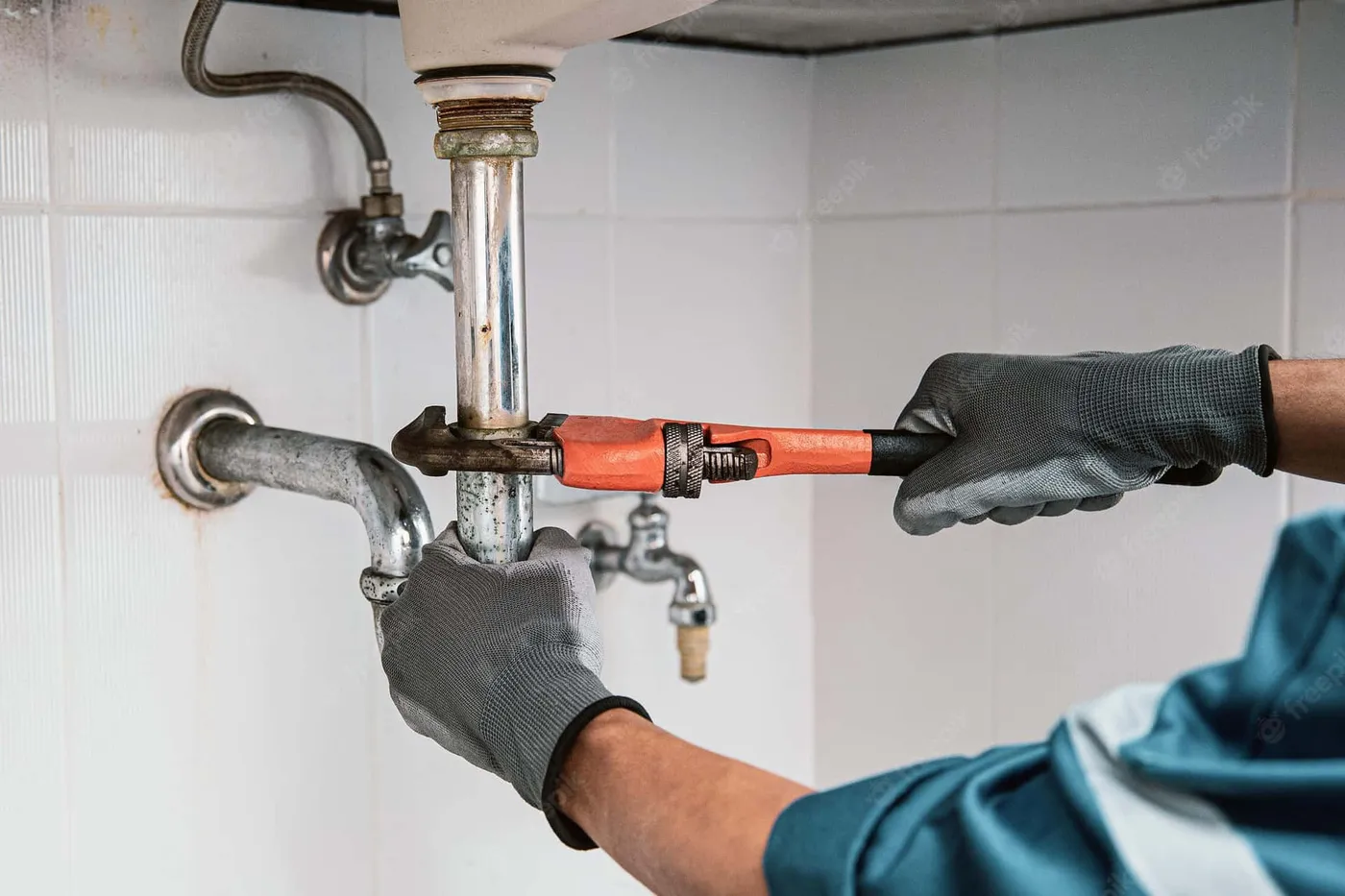
The vans carry pipe, fittings, couplings and the tools to cut and joint, so a burst on accessible pipework is repaired outright on the visit and the supply restored and pressure tested before the engineer leaves. Where the burst sits behind tiling or under a solid floor, the visit ends with the section isolated and the position located, and the opening-up booked for daylight.
We take burst pipe calls at every hour across all 33 boroughs, all year, including the cold snaps when frozen pipework starts failing across London in the same week.
Our emergency burst pipe repair pricing is based on the time of call, materials used, and the complexity of the repair required. We provide a clear quote before any work begins.
What you get
- 24/7 Emergency Dispatch: We answer calls day and night and dispatch the nearest available engineer immediately.
- Rapid Water Isolation: Our first priority is to locate and shut off the correct water supply to stop flooding fast.
- On-Van Parts & Permanent Repair: We carry piping, fittings, and tools to complete a lasting repair during the first visit.
- Damage Minimisation: We work quickly to contain water, protect belongings, and advise on drying out affected areas.
- London-Wide Coverage: From Hampstead to Croydon, our teams cover all boroughs for rapid local response.
- Restoration of Supply: Once repaired and tested, we restore your water service and ensure no secondary leaks exist.
How it works
A method, not a guess
01
Stop tap first, questions second
The call opens with isolating the supply, not with taking your details. Everything else can happen while the water is already off.
02
Dispatch and confirm the fee
The nearest available engineer is assigned and you are given a realistic window, the time band and the visit type before anyone travels.
03
Isolate, contain, expose
On arrival the engineer confirms the supply is secure, contains what is still moving, and opens the smallest access needed to reach the failed section.
04
Repair, restore, pressure test
The damaged section is cut out and replaced with new pipe and joints, then the supply is restored and the circuit pressure tested to confirm nothing else has let go.
7 things to know before you book burst pipe repair in London
Turn the water off before you phone anyone
A burst under mains pressure is the one plumbing failure where two minutes genuinely changes the outcome. Shut the internal stop tap, then open the cold taps to drain the pressure out of the system. In most London homes the stopcock is under the kitchen sink; in flats it can be in a hall cupboard, behind a bath panel or on the shared riser outside the front door. Do this first. Any firm worth calling will ask whether you have, and will talk you through it before taking your details.
Find your stopcock this week, not during the flood
Seized and missing stopcocks are a standing problem in older London housing stock, and the moment you discover yours will not turn is the worst possible moment to find out. Locate it, turn it a quarter turn to confirm it moves, and make sure everyone in the property knows where it is. If it is stiff or weeping at the gland, replacing it is a small scheduled job that removes the single biggest variable from any future emergency.
Electrics change the order of the job
Water tracking across a ceiling void towards downlights, or running down a wall near sockets or a consumer unit, is a different call from a burst over a tiled floor. Say so immediately on the phone, because it moves the job up the queue regardless of the volume involved. If you can reach the consumer unit safely and dry, switch it off. If reaching it means walking through the water, do not, and say that too.
Get the price before the van moves, not on the doorstep
The classic out-of-hours problem is a firm that will not name a figure until an engineer is standing in your hallway at 3am. Ask for the visit type and the time band rate before dispatch and, if you can, get it in a message. For context, Checkatrade publishes UK leak detection at a £162 average with most jobs between £115 and £234 and a full spread of £80 to £1,600, plus hourly diagnostic rates of £95 to £145. Repair is quoted on top, but a firm that will not quote the visit is telling you something.
Ask whether the van carries pipe and fittings
It is the question that separates a repair from a return visit. An engineer arriving with pipe, couplings, fittings and the tools to cut and joint can permanently replace an accessible burst section and pressure test it before leaving. One arriving with a clamp and a torch will cap it, leave you without supply and book the real work for another chargeable day. Ask before you agree to a call-out which of those two you are getting.
This is the call where waiting for cheaper rarely pays
For most leaks we would tell you that a stable situation is better handled in the standard band at a lower rate. A burst is the exception. Even with the supply off, saturated ceilings, soaked insulation and standing water keep doing damage, and the cost of that accumulates faster than the difference between time bands. Stop the water, then get it dealt with rather than waiting for a cheaper hour.
Expect the thaw, not the freeze
Frozen pipes split while frozen but release nothing until they thaw, which is why whole streets of London properties flood on the same mild morning after a cold snap. If a tap ran dry during a freeze, the pipe feeding it is the one to watch as the temperature climbs. Leave the heating on low rather than off while a property is empty in winter, know where the stopcock is before the thaw, and check lofts and unheated voids where pipework is least protected.
Compare like for like
What separates a useful burst pipe call-out from a slow one
When a pipe lets go, the cost is set in the first few minutes, not by the length of copper that failed. Everything that follows, the floor, the ceiling below, the plaster and the weeks of drying, is decided by how quickly the supply stopped moving. So the measure of a burst pipe service is not how fast the van is. It is what happens between you dialling and the water stopping.
| What to check | A firm that leads with an arrival time | A cap-it-and-rebook firm | How we run the call |
|---|---|---|---|
| The first two minutes on the phone | Spent promising twenty minutes to win the job, which is a promise nobody in London traffic can keep. | Spent taking details for a job sheet while the water carries on doing damage in the background. | Spent getting you to the stop tap. Water stopped by you at once beats water stopped by us in forty minutes. |
| If you cannot find the stop tap | You are told to wait for the engineer, and the damage keeps compounding until they arrive. | Left to work it out yourself, with no help until someone is physically in the room. | We stay on the line and work through the usual places: under the sink, the hall cupboard, behind the bath panel, the shared riser. |
| How arrival is described | An optimistic figure that suits the sale, then silence when it slips by an hour or two. | A half-day window, which is fine for a booked job and useless for a flood. | We tell you honestly where the nearest engineer is and what is realistic, and we call you if that changes. We do not quote a headline time. |
| What arrives on the van | Whatever the subcontractor happened to have with them for the last job. | Enough to make it safe, with the actual repair written up for a second appointment. | Pipe, fittings and the tools to cut and joint, so an accessible burst can be finished rather than postponed. |
| Temporary versus permanent | A clamp goes on, the job is called done, and nobody explains that it is a holding measure. | Made safe as standard, with the permanent fix quoted later whether or not it was needed. | Both are legitimate at 3am. What matters is that you are told which one is behind your wall before we leave. |
| When the burst is hidden | Floorboards come up where the water shows, which is frequently nowhere near the split. | The visible wet patch is treated as the location, so the real fault stays where it is. | Water travels along joists and under screed. We trace it back to the split before anything is opened up. |
| The out-of-hours rate | Appears on the invoice as a surcharge nobody mentioned when you rang. | One flat emergency figure that covers an unclear amount of work. | The band for the hour you are calling in is said out loud on the phone, before the van moves. |
From the forums
The questions that come up when a leak starts
Burst pipes come up constantly in public discussion, usually after the invoice has arrived rather than before. The same hard-won lessons repeat.
Homeowners comparing emergency call-out invoices
The recurring story is a modest repair carrying an immodest bill: a shock invoice for a couple of hours' work, with the caller realising afterwards that no price was ever agreed. The consensus is blunt: panic is the product these operators sell, and anyone who phones with water pouring through a ceiling will agree to almost anything. Regulars advise getting the call-out fee, hourly rate and minimum charge by text before dispatch, and treating refusal as the answer. Our take: that advice is exactly right, and it is why we agree a fixed fee at booking rather than quoting after arrival.
The single most repeated piece of advice: find your stopcock now
Ask about a burst pipe on a DIY public discussion and the first ten replies will ask whether the water is off. The community's strongest consensus is that every householder should locate and test their internal stopcock before an emergency, because a seized valve discovered at 2am is its own crisis. Posters repeatedly note that once the water is off, most "emergencies" become next-morning jobs at daytime rates. Our take: agreed. Isolating the supply protects your home far faster than any engineer can arrive, and it costs nothing.
Confusion over insurance and trace-and-access cover
Threads about escape-of-water claims show the same knowledge gap: people discover only mid-claim that buildings insurance typically pays for the damage and for finding and accessing the leak, but not for repairing the pipe itself. The other repeated frustration is documentation. Vague invoices that name no cause or origin get bounced by loss adjusters, forcing homeowners to fight for costs they were entitled to. Our take: this is why our trace-and-access reports set out cause, origin, method, moisture map and photos within 48 hours, structured for UK loss adjusters.
Whether to pay out-of-hours rates or wait until morning
The money-minded consensus is that the out-of-hours premium is only worth paying when water is still escaping. London evening and weekend call-outs carry a clear uplift over the daytime band for the same first hour, so posters advise isolating the supply, living without water overnight, and booking a daytime visit, which often cuts the labour cost substantially. The exception everyone flags is an unfindable or unisolatable leak, where delay means damage. Our take: sound reasoning. If the stop tap holds, a next-day appointment is nearly always the cheaper and calmer route.
Warnings in consumer discussion about national "24/7 emergency plumber" websites
A well-worn warning in these discussions: many slick national emergency-plumbing sites are call centres or lead-generation fronts that subcontract to whoever is nearby, with pricing revealed only via a contract produced on the doorstep. Recurring complaints include startling hourly rates and admin staff phoning mid-visit to pressure customers into signing before work starts. The community's fix is to use a local firm with named, checkable reviews and a real address. Our take: valid. Always confirm who is actually attending and what they charge before you book, not after.
Symptoms
Burst pipe: act in this order
A burst can flood a room in minutes. Sequence matters more than speed alone.
- Sudden spray or jet from a pipe or fitting
- Ceiling bulging or water pouring through a light fitting
- Catastrophic pressure loss and flooding under a sink or bath
- Frozen pipe that has split after a cold snap
While you wait for us
- 1Shut the internal stopcock; if stuck, shut the external meter valve.
- 2Switch off electrics in the wet zone at the consumer unit if water is near sockets.
- 3Move people, pets and valuables; put buckets under active drips.
- 4Photograph the scene for insurance before clearing water if safe.
Make safe, then permanent
We isolate, drain and make safe first, then complete a permanent repair with the right fittings for copper or plastic. Hidden bursts still get proper detection before we open a second wall on a guess.
Book a visitLondon housing stock
Built for how London actually leaks
Housing stock across the capital fails in different ways. We match the method to the building, not a one-size survey script.
Victorian & Edwardian terraces
Original floorboards, cast-iron stacks and decades of patch repairs. We pressure-test circuits and listen through timber before any board is lifted.
Mansion blocks & conversions
Shared risers, stacked bathrooms and flat-to-flat disputes. Origin reports settle liability between leaseholders, freeholders and block insurers.
Post-war & 1970s stock
Copper branches, cold-water tanks and ageing joints. Acoustic and thermal methods locate slow drips that never show as a flood.
New-build flats & towers
Plastic pipe, underfloor heating and boosted mains. Tracer gas and thermal imaging matter more than a listening stick alone.
Questions
Burst Pipes FAQs for London homeowners
What do I do right now, before anyone arrives?
Close the internal stop tap. It is usually under the kitchen sink, sometimes in a hall or utility cupboard, occasionally outside near the boundary. Then open the cold taps to drain the pressure out of the system. If water is anywhere near electrics, switch off at the consumer unit if you can do that safely and dry, and keep clear of it if you cannot.
I cannot find my stop tap. What then?
Tell us that on the call and we will work through the likely places for your type of property while an engineer travels. Meanwhile, if there is a gate valve or isolation valve on the branch feeding the burst, closing that stops it just as well. In a flat, the shared riser may have a valve inside your entrance cupboard.
Will you fix it on the visit or just make it safe?
Accessible pipework is cut out and permanently replaced on the visit, with the supply restored and pressure tested afterwards. A temporary clamp or coupling is only used where a permanent repair genuinely cannot be completed that night, and in that case you are told exactly what was done and what still needs finishing.
Do you need to cut into my walls or floors?
Only as far as reaching the failed section requires, and only after it has been located rather than guessed at. An exposed run under a sink needs no opening at all. A burst behind tiling or under a screeded floor needs an access point, and the point of locating it precisely first is that there is one opening instead of several.
Why do so many pipes burst in the same week?
Because freezing and thawing does the damage together. Water expands as it freezes and splits the pipe, but nothing escapes until the thaw, which is why a whole run of London properties can flood on the same mild morning after a cold snap. If you have had no water from a tap during a freeze, treat the thaw as the moment to be watching for it.
Does a burst at 3am cost more than one at 3pm?
The night band carries a stated uplift, confirmed before an engineer travels rather than announced on arrival. There is no separate weekend or bank holiday multiplier on top. With a burst, though, this is one of the few calls where waiting for the cheaper band is rarely the right trade, because the damage accumulates faster than the saving.
What do I do the moment I find a burst pipe?
Close the internal stop tap, then open the cold taps to drain the remaining pressure out of the pipework. If water is near downlights, sockets or the consumer unit, switch the electrics off at the board provided you can reach it safely and dry. Move what you can out of the water and call. Do not start mopping until the supply is off, because that is the only step that changes how much damage there is.
I cannot find or turn my stopcock. What now?
Say so on the call and you will be talked through the likely locations for your property type while an engineer travels. In the meantime, any gate valve or isolation valve on the branch feeding the burst will stop it just as effectively, and in flats there is often a valve inside the entrance cupboard serving the shared riser. If nothing will turn, the external boundary stop valve is the fallback, though it usually needs a key.
Is a burst pipe always an emergency?
Effectively yes, and it is one of the few leaks where that is true regardless of the hour. Mains pressure empties into a property fast, and the damage from saturated ceilings, insulation and floors continues even after the supply is off. Get the water off, then get it attended to rather than waiting for a cheaper time band, because the saving is smaller than the additional damage.
Will the repair be finished on the visit?
Where the burst section is accessible, yes: it is cut out, replaced with new pipe and joints, and the circuit pressure tested before the supply is restored. Where the pipe sits behind tiling or under a solid floor, expect the visit to end with the section isolated and located and the opening-up booked for daylight. Ask which to expect when you book, and ask whether anything left in place is temporary.
Why do burst pipes all seem to happen at once?
Because the failure and the flood are separated by the weather. Water expands as it freezes and splits the pipe, but the split stays plugged with ice until it thaws, so a whole run of properties can flood on the same mild morning after a cold spell. If a tap stopped running during a freeze, treat the thaw as the moment to be present and watching, with the stopcock location already known.
Explore the cluster
Related leak detection services & guides
Leak detection London
Hub page for multi-method surveys
Acoustic detection
Listen for pressurised pipe noise
Thermal imaging
Map wet and warm anomalies
Tracer gas
Find plastic-pipe and screed leaks
Underground leaks
Supply pipe and mains traces
Trace & access
Insurer-ready reports
Pricing
Fixed fees and no find no fee
Areas we cover
All 33 London boroughs
Leak detection guide
How methods compare
Insurance claims
Escape of water explained
London-wide
Burst Pipes across all 33 boroughs
Same multi-method kit and fixed-fee approach from Barking to Richmond. Pick your borough for local housing detail.
Water going somewhere it shouldn't?
Tell us the symptoms and your postcode. We'll confirm the visit, the fixed detection fee and the arrival window before you commit to anything.
Book a detection visit