Home/Services/Acoustic Detection
Fast Leak Detection
Acoustic Leak Detection London
Escaping water under pressure makes a noise, and that noise travels a long way through pipe. Listening for it is the fastest way to turn a wet patch into a point on the floor, and it is the one detection method that needs nothing drained, emptied or switched off first.
How an acoustic call-out is priced
| Job | How it is charged | Time |
|---|---|---|
| Listening survey on reachable copper or steel | Fixed detection fee, settled on the call | Usually inside the first visit |
| Ground microphone work on a buried supply run | Same fixed fee, longer slot booked | Longer than an indoor trace |
| Quiet plastic pipe needing a second method to confirm | Covered by the same fee, no extra charge for switching method | Adds time, not a second visit |
| Night, weekend or bank holiday attendance | Out-of-hours band, stated before the engineer travels | Whenever you call |
| Repair once the point is marked | Quoted on its own, after you have seen the location | Same visit where the pipe is reachable |
How each stage is charged, not a quote. The detection fee is fixed and agreed on the call, before an engineer travels.
That is why it is what our engineers reach for on a call at two in the morning. The system stays live, the survey starts the moment they walk in, and there is no waiting for a circuit to empty before anyone can begin. When you ring, the controller is working out which engineer is nearest and what is realistic tonight, not reading you a script.
Sound has limits and it is only fair to say so. Plastic pipe deadens it, low pressure quietens it, and a slow weep on a cold supply can be close to silent. When the pipe will not talk, we change method inside the same visit rather than booking you in again. The aim is a single marked spot, not a confirmation that the room is damp.
The detection fee is fixed and agreed on the phone, before an engineer sets off, so nothing is negotiated on your doorstep at 3am. If the pipe goes quiet and we have to switch to another method, that is included rather than charged as a second visit. Any repair is quoted separately once you have seen where the leak actually is.
What you get
- 24/7 emergency dispatch across all London postcodes
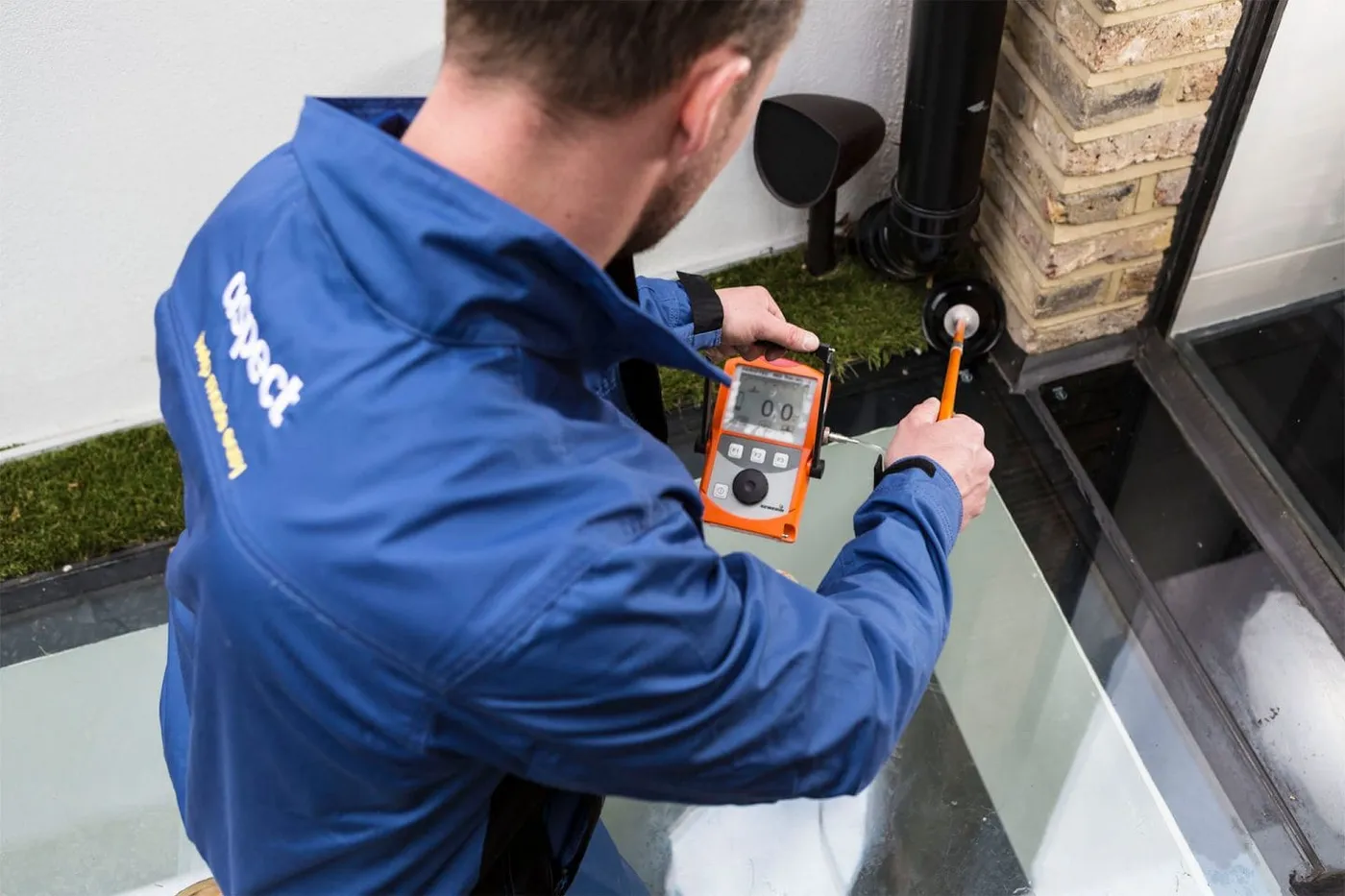
- Non-invasive acoustic listening devices pinpoint exact leak locations
- Fast diagnosis prevents extensive water damage to property structure
- Accurate targeting minimises repair work and restoration costs
- Immediate on-site report detailing leak source and recommended action
- Engineers equipped for all common London property types, from Victorian terraces to modern flats
How it works
A method, not a guess
01
The call, and the stop tap
Before anything else you will be asked what the water is doing and whether you can reach your stop tap. Stopping it yourself in two minutes beats us stopping it in forty.
02
Working out the hour
If the supply is off and nothing is spreading, we will tell you a booked morning slot is cheaper. If it is still running, an engineer is assigned there and then.
03
Listening while it is quiet
A still house is the best listening condition there is. The engineer works along the run with contact microphones and ground sensors, narrowing from a wall to a length to a point.
04
Marking it, then deciding
The spot is marked and shown to you. Then the honest conversation: what has to be opened tonight, and what is better and cheaper done in daylight.
What to sort out before an acoustic engineer is on the way
Stop the water before you worry about the appointment
Almost everything an escape of water eventually costs is decided in the first few minutes, not by the piece of pipe that failed. The floor, the ceiling below, the plaster and the weeks of drying are all a function of how long water kept moving. So the useful measure of the firm you have rung is whether the person answering spends the opening of the call on your stop tap or on your card details. If it is the card details, you have reached a booking service rather than a plumber.
Find your stop tap now, not at two in the morning
Hunting for a stop tap in the dark with water coming through a light fitting is the most expensive five minutes in domestic plumbing. In most London homes it is under the kitchen sink. In converted flats it is often in a hall cupboard, behind a bath panel or inside the airing cupboard, and in purpose-built blocks it can sit on the communal riser outside your front door. Find yours this week and give it a quarter turn to check it is not seized, because seized ones are common in older stock.
A quiet building is worth more than a fast van
Acoustic work depends on hearing something faint through brick, screed and floorboards, and it competes with everything else a building is doing. Boilers, extractor fans, a washing machine mid-cycle, a fridge compressor and traffic through a party wall all sit in the same range as the leak. This is the genuine argument for working at night: a still house at 3am gives a cleaner signal than the same house at four in the afternoon. If you can switch the noisy things off before the engineer arrives, do.
Ask what happens when the pipe turns out to be silent
Sound travels well along copper and steel and very poorly along plastic, which absorbs it rather than carrying it. A great deal of modern London pipework, and most repaired sections, is plastic. Low mains pressure and a slow weep both quieten things further. The question worth asking before booking is therefore not whether they have a microphone, but what they do on the visit when the microphone hears nothing. If the answer involves a new appointment and a new fee, the risk of a silent pipe is sitting with you.
Establish whether it needs to be tonight at all
Once the supply is isolated and nothing is spreading, the emergency is over and you are into a scheduling decision rather than a crisis. A leak on a branch you can isolate, with the rest of the property still in water, is a booked morning job. Ask directly whether your situation genuinely needs an out-of-hours attendance, and treat a firm that never says no as one that has an interest in the answer. The daytime band buys the same engineer doing the same work for less.
Get the figure and the time band before anyone travels
The out-of-hours version of an unpleasant surprise is a firm that will not put a number on the visit until someone is standing in your hallway, at which point you are tired, wet and in a poor position to negotiate. Get the visit type and the applicable band stated on the call, and in a message if you can. Checkatrade publishes a UK average of £162 for leak detection, with most jobs between £115 and £234 and a full recorded spread of £80 to £1,600, along with hourly diagnostic rates of £95 to £145. Those published figures are a reasonable sanity check on anything quoted to you in the early hours.
Compare like for like
What a night-time acoustic call-out should look like
Acoustic work is the one detection method that needs nothing switched off, drained down or emptied, which is exactly why it suits a call at one in the morning. The gap between firms is not the microphone. It is whether the visit is organised so the listening actually happens while the building is quiet, and whether you are told what it costs before anyone gets in a van.
| What to check | A switchboard that books vans | A daytime-only detection firm | How we run the call |
|---|---|---|---|
| What the first call is spent on | Postcode, card details and a booking reference. Nobody asks what the water is doing or whether you can still reach the stop tap. | A callback slot for the morning, which is reasonable advice but no help at all if a ceiling is filling now. | The controller asks what the water is doing first and talks you through isolating it, because that is worth more than the arrival time. |
| Whether the quiet hours get used | An engineer arrives whenever the diary spits them out, often into a household that is awake and moving about. | Listening happens in working hours, competing with traffic, boilers, lifts and everyone else in the building. | A silent house at 3am is the best listening condition there is, and we would rather use it than wait for a noisy Tuesday. |
| When the price is fixed | Discussed on the doorstep, once you are tired, wet and in no position to argue about it. | Quoted properly, but only during office hours, so an overnight problem sits unpriced until someone opens up. | The detection fee and the time band are agreed on the phone, before an engineer sets off. Nothing is settled at your front door. |
| When the pipe stays silent | The visit ends with a shrug and an invoice for the time, and you are invited to book something else. | Booked back in for a different method on another day, at another charge, while the water keeps going. | Plastic and low-pressure runs go quiet. We change method inside the same visit rather than turning it into a second one. |
| Who you actually speak to | A call centre that covers several trades and hands the job to whoever accepts it first. | An answering service overnight that takes a message for the morning. | Someone who knows which engineers are out, where they are and what is realistic tonight, rather than reading from a script. |
| Finishing versus coming back | The leak is located, then a separate appointment is booked to do anything about it. | Detection only by design, so the repair is always someone else's visit. | Where the pipe can be reached, the same engineer carries what is needed to finish it rather than booking you in again. |
| Deciding it can wait | Never suggested. A night attendance is a night attendance and the rate is the point. | Effectively the default, whether or not the situation can actually survive until morning. | If the supply is off and nothing is spreading, we will say so and book you into the cheaper daytime band instead. |
From the forums
The questions that come up when a leak starts
Strip the outrage out of the recurring leak detection complaints and what is left is mostly a scheduling argument: people who called someone out at midnight and wish they had waited, and people who waited and wish they had not. The pattern is consistent enough to be useful.
Threads where someone paid a night rate for a job that could have waited
A recurring regret is the call made in a panic when the water had already been isolated. Posters describe shutting the stop tap, calming down, then ringing anyway, and paying an out-of-hours premium for a visit that established something a booked morning slot would have established just as well. The consistent advice from people who have been through it is to stop the water first and then decide, because the decision looks very different ten minutes later. It is also why a firm that talks you into isolating the supply and then offers you a daytime slot is behaving well rather than turning work away.
Posts about surveys that produced a damp area rather than a location
The complaint that comes up most often is not about price at all, it is about being handed a result that cannot be acted on. A reading confirming the floor is wet tells the homeowner what they already knew, and an area described in square metres can amount to a whole room. People describe paying for this twice before understanding the distinction. The thing to establish beforehand is what the visit is supposed to end with: a point you can open up, or a region you are invited to explore at your own expense.
Discussions about plastic pipework defeating a listening survey
Anyone who has had an acoustic visit end inconclusively on plastic pipe tends to come back and warn others about it, and the responses from tradespeople broadly agree that sound simply does not carry the same way. What frustrates people is less that the method failed and more that the failure became a new booking. A survey priced for the outcome rather than the technique absorbs that risk, which is why switching method mid-visit should not appear as a second charge.
Advice repeated whenever somebody cannot find their stopcock
The single most upvoted piece of practical advice on these discussions has nothing to do with choosing a firm: locate and test your stop tap before you need it. Regulars point out that a seized stopcock discovered during a flood is effectively no stopcock at all, and that in flats it may be outside the front door entirely. The people who followed that advice tend to be the ones posting about a manageable incident rather than a ruined floor.
Arguments about whether to ring the insurer before or after
Opinion divides on the running order, but the practical consensus is to stop the water and get the source identified first, then deal with the paperwork, because a leak still running is losing more money than a delayed phone call. What almost everyone agrees on is that photographs taken on the night are worth having, and cost nothing. Take them before anything is moved, mopped or opened up.
Symptoms
When acoustic leak detection is the right tool
Acoustic methods listen for pressurised water escaping metal and some buried pipes. These signs usually mean a ground microphone or correlator should be on the van.
- Running-water sound with all outlets closed
- Buried supply pipe leak (meter spinning, dry garden or driveway)
- Copper or steel pipework under floors or in walls
- Known mains or communication-pipe route with high usage
- Damp along a straight pipe run rather than a random patch
How to prepare for an acoustic survey
- 1Keep the system pressurised if safe. Dead systems are harder to hear.
- 2Reduce background noise where possible (fans, washing machines, traffic windows).
- 3Point out stopcocks, meter locations and any recent plumbing work.
- 4Tell us if pipework is mostly plastic. We will plan tracer gas backup.
Acoustic alone is not always enough
Plastic pipe absorbs leak noise. Slow drips and low-pressure losses can be nearly silent. We still lead with acoustics on metal, then cross-confirm with thermal imaging, moisture mapping or tracer gas so a quiet leak is not missed.
Book a visitLondon housing stock
Built for how London actually leaks
Housing stock across the capital fails in different ways. We match the method to the building, not a one-size survey script.
Victorian & Edwardian terraces
Original floorboards, cast-iron stacks and decades of patch repairs. We pressure-test circuits and listen through timber before any board is lifted.
Mansion blocks & conversions
Shared risers, stacked bathrooms and flat-to-flat disputes. Origin reports settle liability between leaseholders, freeholders and block insurers.
Post-war & 1970s stock
Copper branches, cold-water tanks and ageing joints. Acoustic and thermal methods locate slow drips that never show as a flood.
New-build flats & towers
Plastic pipe, underfloor heating and boosted mains. Tracer gas and thermal imaging matter more than a listening stick alone.
Questions
Acoustic Detection FAQs for London homeowners
Does acoustic detection need my water or heating turned off?
No, and that is its main advantage out of hours. The leak has to be under pressure to make a sound, so the system stays exactly as it is. Nothing gets drained, nothing gets emptied, and the survey can start the moment the engineer is through the door. Methods that need a drain-down are better suited to a planned daytime visit.
What can I do before anyone arrives?
Shut the stop tap if water is actively running. Then, if it is safe, turn off anything that makes noise: the boiler, extractor fans, a washing machine mid-cycle. Leak noise is faint and competes with everything else in a building. A quiet property when the engineer arrives genuinely shortens the survey.
Why might you not use acoustic detection on my leak?
Plastic pipe absorbs sound rather than carrying it, and a great deal of modern and repaired London pipework is plastic. Low mains pressure and a slow weep both reduce the noise as well. If the run will not produce a usable signal, we move to heat or tracer gas in the same visit rather than persisting with a method that is not working.
Is it worth calling at night for this?
It depends entirely on what the water is doing. If it is running and spreading, yes, and we are staffed for it. If you have already isolated the supply and nothing is getting worse, the emergency is over and a daytime slot costs less for the same work. We will say which one applies to you rather than simply taking the booking.
Will the floor have to come up?
Not for the listening itself, which is done entirely from the surface. Something may have to be opened to reach the pipe afterwards, but that is the point of locating it first: one small opening over a marked spot instead of a room lifted on a hunch. You see the mark and agree the access before anything is cut.
Is it worth calling out an engineer at night for a hidden leak?
Only if water is still moving. If you have shut the stop tap and nothing is getting worse, the urgent phase is over and a booked daytime slot does the same work for less. If you cannot isolate it, or it is running into a ceiling, near electrics or into a neighbouring property, then yes, and you should not wait. The test is not how alarming it looks, it is whether the situation is still deteriorating.
What can I do to make the survey quicker?
Turn off anything that hums, spins or fires: the boiler, extractor fans, the washing machine, air conditioning. Clear access to the areas you suspect and to the stop tap and meter. If you have any idea where pipes run, say so. A quiet, accessible property genuinely shortens a listening survey, and a shorter survey is a cheaper one when anybody is charging by the hour.
Why do you sometimes stop listening and use a different method?
Because the pipe is not producing a usable sound. Plastic deadens it, low pressure reduces it, and a slow weep may barely make one. Persisting with a method that is not working is how visits end inconclusively. Moving to thermal imaging or tracer gas within the same visit is normal work rather than a new job, and it should not appear as a second fee on your bill.
Do you need access to my neighbour's flat?
Sometimes, particularly in a converted house or a block where the run passes through more than one property. It is worth knocking early and asking, because access arranged in advance is far easier than access requested at midnight. If the neighbour is away or refuses, we work from your side, though it may take longer and the result can be less precise.
How much should acoustic leak detection cost in London?
There is no single figure, and anyone quoting one without asking about your property is guessing. For a reference point, Checkatrade publishes a UK average of £162 for leak detection, with most jobs between £115 and £234 and a full recorded spread of £80 to £1,600. Hourly diagnostic rates are published at £95 to £145. What matters more than the number is the shape of the deal: a fixed fee agreed before travel cannot drift, whereas an hourly rate on an open-ended search can.
Can you hear a leak through a concrete floor?
Often, though it depends on the pipe and the pressure behind it. Concrete conducts sound reasonably well, so a decent leak on a metal pipe under a solid floor is usually audible with a ground microphone. A small weep on plastic under the same floor may be effectively silent, which is the case where tracer gas earns its keep by surfacing through the slab instead of relying on noise.
Explore the cluster
Related leak detection services & guides
Leak detection London
Hub page for multi-method surveys
Thermal imaging
Map wet and warm anomalies
Tracer gas
Find plastic-pipe and screed leaks
Underground leaks
Supply pipe and mains traces
Trace & access
Insurer-ready reports
Pricing
Fixed fees and no find no fee
Areas we cover
All 33 London boroughs
Leak detection guide
How methods compare
Insurance claims
Escape of water explained
London-wide
Acoustic Detection across all 33 boroughs
Same multi-method kit and fixed-fee approach from Barking to Richmond. Pick your borough for local housing detail.
People also book
Leak Detection
A leak running now will not wait for an appointment.
Learn moreUnderground Leaks
A supply pipe leaking under a drive can run for weeks.
Learn moreThermal Imaging
An infrared camera shows a wet floor in minutes rather than hours, which is why we bring one to every urgent London callout, day, night or weekend.
Learn moreWater going somewhere it shouldn't?
Tell us the symptoms and your postcode. We'll confirm the visit, the fixed detection fee and the arrival window before you commit to anything.
Book a detection visit